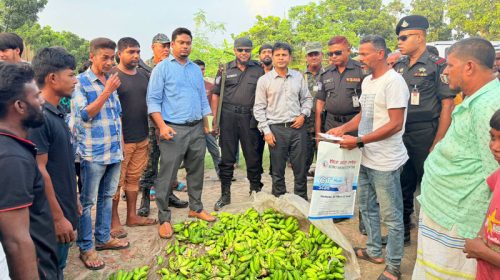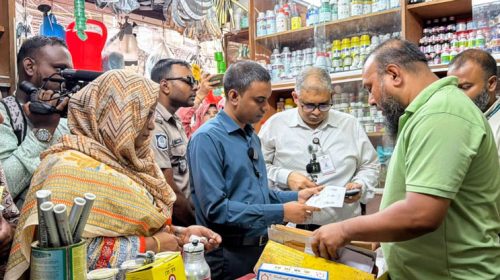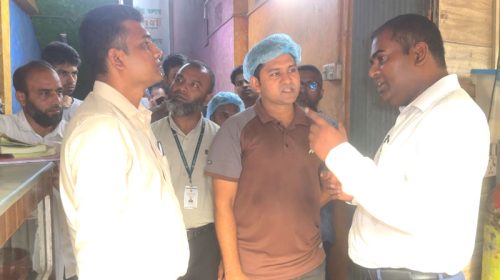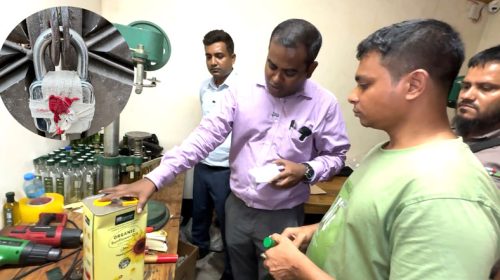










Two restaurants in the capital’s Panthapath area have been fined a total of Tk 60,000 for preparing food in unhygienic conditions, using colours harmful to human health and storing stale food in refrigerators.
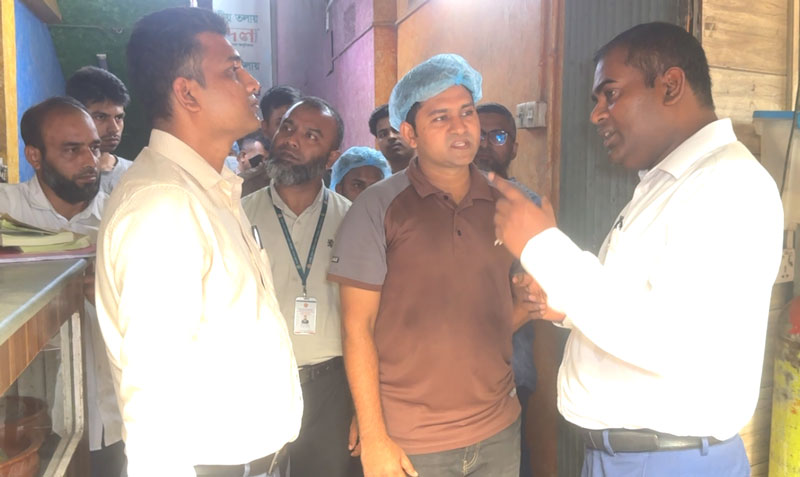
The Directorate of National Consumer Rights Protection (DNCRP) conducted a drive in the area on Sunday afternoon, during which officials found various irregularities at Madal Restaurant and Saptadinga Restaurant.
Following the inspection, Madal Restaurant was fined Tk 40,000, while Saptadinga Restaurant was fined Tk 20,000 under the Consumers’ Right Protection Act, 2009.
The drive was led by Nayan Kumar Saha, deputy director of the DNCRP’s Dhaka Divisional Office, and Assistant Director Abdus Salam.
According to the inspection team, both restaurants were preparing food in unhygienic and dirty environments. Officials also found the use of food colouring considered harmful to human health, stale food stored in refrigerators and food kept in unclean containers.
The authorities took legal action against the establishments over the violations, citing potential risks to public health.
Speaking about the drive, Nayan Kumar Saha said restaurants are required to maintain proper hygiene standards while preparing and storing food.
“Maintaining hygiene in food preparation and storage is mandatory for every restaurant. However, during the inspection, we found several irregularities, including food being prepared in extremely unhygienic conditions, the use of harmful colouring agents and the storage of stale food. Such practices can pose serious health risks to consumers. That is why fines have been imposed on the two establishments under the Consumers’ Right Protection Act. Our drives will continue in the public interest,” he said.
The DNCRP said it would continue conducting such drives to ensure consumer safety and prevent practices that put public health at risk.