





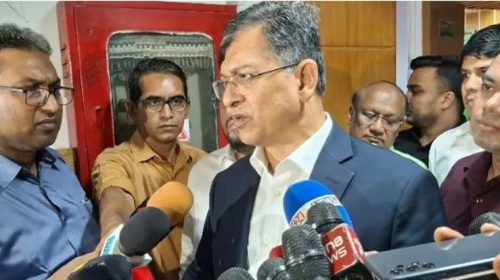


Protecting consumer rights requires more than enforcing laws; it also calls for a positive change in social values and responsible behaviour, said Md Zahirul Islam, director general of the Directorate of National Consumer Rights Protection (DNCRP).
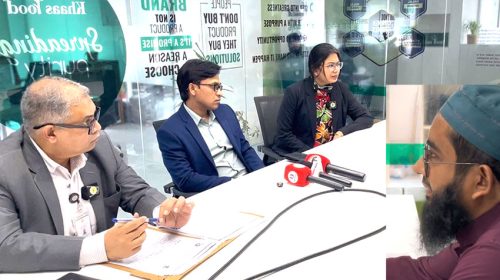
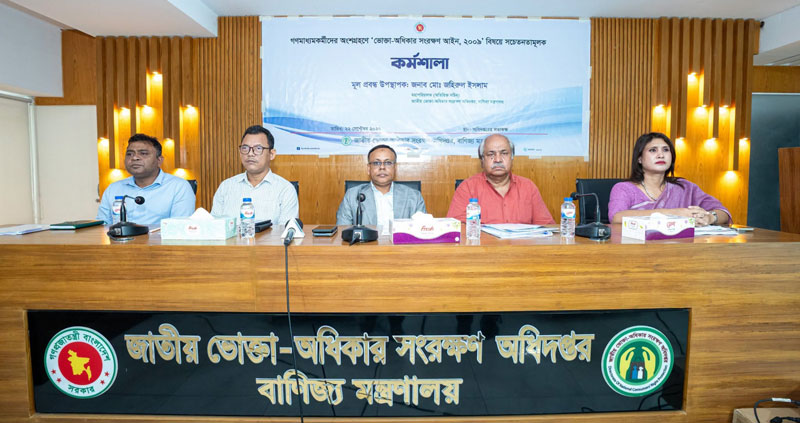
“Legal enforcement alone cannot ensure all aspects of consumer rights protection,” he said at a workshop on the Consumer Rights Protection Act, 2009, organised for media professionals at the DNCRP headquarters in Dhaka today.
“Laws and regulations are being reformed as necessary, but alongside these efforts, ensuring a positive change in our overall values and responsible behaviour is equally important,” Zahirul said.
“After all, we are all consumers in one way or another, and every consumer has the right to safe and quality products and services,” he added.
Around 44 journalists from national print and electronic media outlets attended the workshop at the DNCRP conference room at TCB Bhaban in Karwan Bazar.
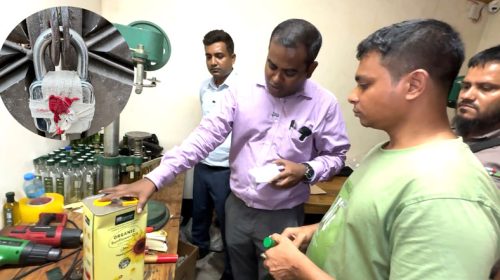
The DNCRP chief said counterfeit and adulterated products were still present in the market and stressed collective action against the production and marketing of such products.
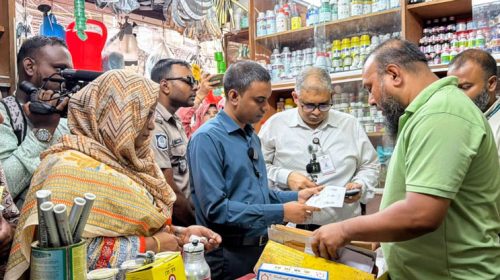
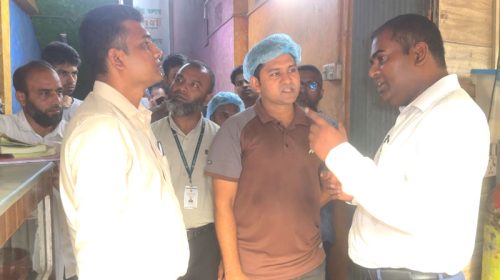
He said the directorate had already increased its market monitoring and enforcement drives and would further strengthen them in accordance with the law.
Zahirul also urged journalists to help raise public awareness by reporting irregularities in an objective and fact-based manner.
“Only through collective efforts can we build a safe, orderly and responsible market system,” he said.
During an open discussion, journalists raised questions about the DNCRP’s role in monitoring prices of essential commodities, strengthening anti-adulteration drives, resolving complaints related to online fraud and e-commerce, and addressing manpower and logistical shortages at the field level.
They also sought information about simplifying the digital complaint-filing process, proposed amendments to the Consumer Rights Protection Act, and plans to expand the directorate’s activities outside Dhaka.
The DG responded to the questions and explained the directorate’s ongoing activities and future plans.
At the workshop, DNCRP Director (Activities and Laboratory) Atia Sultana said the event was aimed at strengthening cooperation between the directorate and the media.
“The media plays an important role in informing people about their legal rights, the process of filing complaints and the activities of the directorate,” she said, urging journalists to continue supporting consumer rights protection through accurate, objective and responsible reporting.
Assistant Director Tahmina Begum made a presentation on the Consumer Rights Protection Act, 2009, while Assistant Director Muhammad Hasanuzzaman of the DNCRP’s Dhaka District Office spoke about field-level monitoring activities.
Assistant Director Abdul Jabbar Mondal of the Dhaka Divisional Office said stronger awareness campaigns would make preventive and remedial measures more effective.
“Greater public awareness also makes businesses more conscious of their responsibilities,” he said, stressing the media’s role in creating awareness among both consumers and businesses.
Consumers Association of Bangladesh (CAB) Secretary General Advocate Humayun Kabir Bhuiyan said the establishment of the DNCRP was the outcome of CAB’s longstanding movement for consumer rights.
He called for stronger action against businesses repeatedly involved in consumer-related offences, including closure where necessary.
Dhaka Reporters Unity General Secretary Mainul Hasan Sohel said consumers would benefit from stronger and more effective legislation.
He called for a review of the penalties and fines under Section 52 of the existing law and stressed greater coordination among government agencies in protecting consumer rights.
Sohel also welcomed the inclusion of digital and online fraud in the proposed amendments and suggested organising regular essay competitions to increase awareness of consumer rights and civic responsibilities.
National Press Club President Hasan Hafiz said rising fuel prices directly affect ordinary people and called for effective measures to reduce public hardship.
He also urged the authorities to strengthen regular enforcement drives and take effective action against extortion. Hafiz proposed forming a national task force and called for greater communication and coordination between government agencies, the public and other stakeholders.
The workshop was chaired by Sebastian Rema, director (Administration and Finance) of the DNCRP.
In his concluding remarks, Rema said laws alone were not enough to bring about the desired changes and stressed the need for broader changes in social values.
He thanked the participants for their active participation and valuable suggestions and formally concluded the workshop.