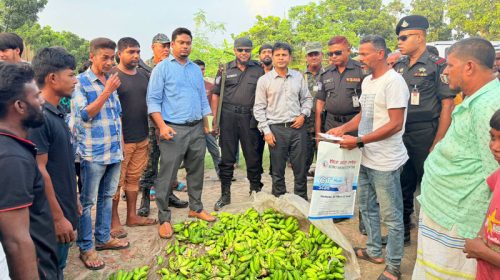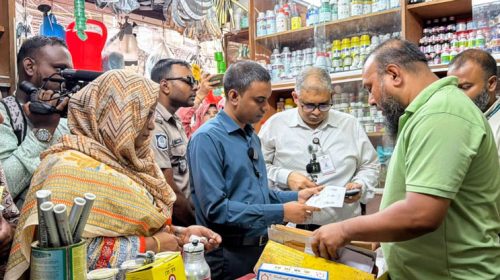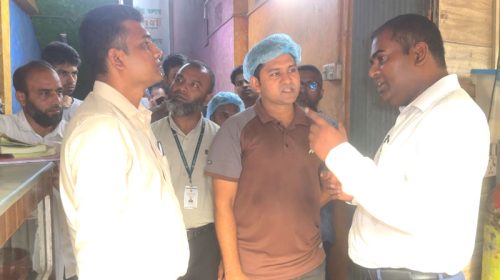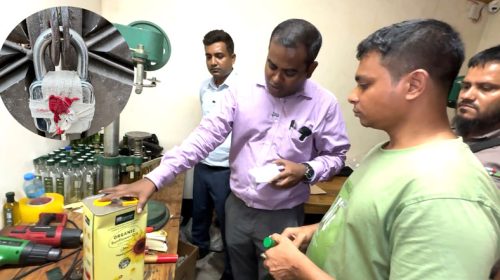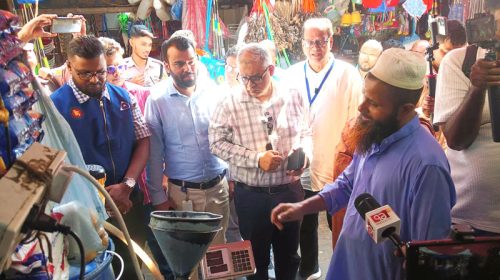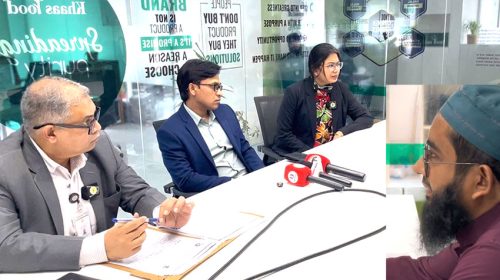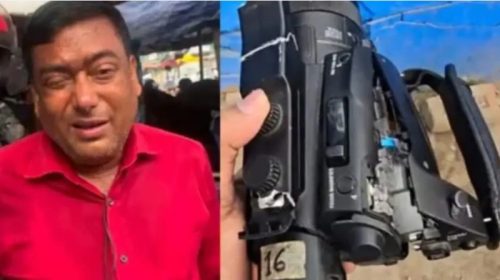
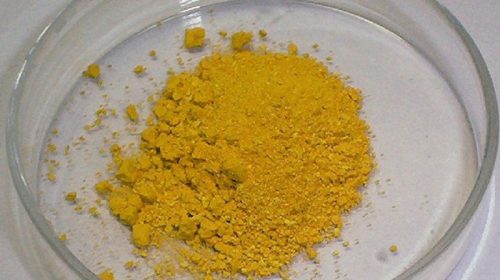








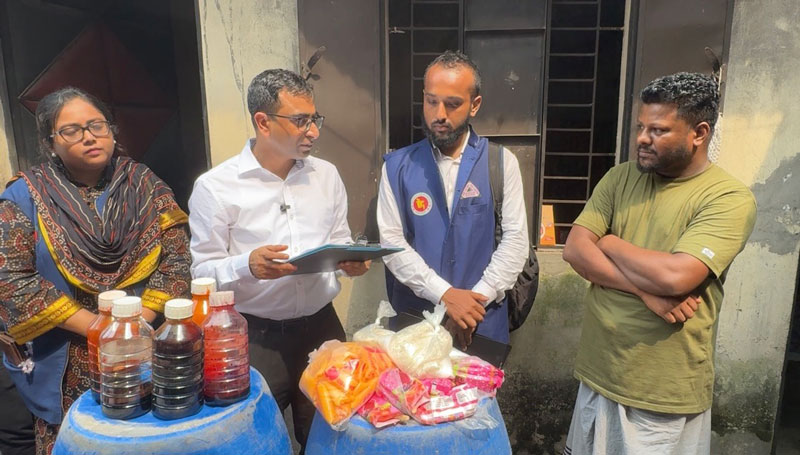
Bangladesh Standards and Testing Institution (BSTI) has shut and sealed a factory in the capital’s Ulan area for allegedly using textile dyes, industrial chemicals, and saccharin to produce ice lollies and ice cream.
A mobile court also fined the factory Tk 50,000 and ordered the destruction of materials found there during a drive in the Hatirjheel area of Rampura today.
The operation was led by BSTI Executive Magistrate Md Mahbubul Islam. BSTI Field Officer (CM) Azmir Khan Majlish and examiner Abdullah Al Kafi were also present.
According to BSTI officials, the factory was using dyes meant for textiles to color ice lollies and ice cream. Industrial chemicals were allegedly being used instead of milk, while saccharin was used as a substitute for sugar.
The inspection also found the factory using WASA water to produce the food items, which were being made under different names.
BSTI officials said the products were being manufactured in an unhygienic environment and that the factory had no required BSTI license or approval for producing the food items.
The mobile court fined the factory Tk 50,000 under the BSTI Act 2018. In default of payment, the offender would face three months’ imprisonment, officials said.
The court also ordered the destruction of the materials found at the factory, while BSTI sealed the premises.
Azmir Khan Majlish said the factory was producing curd, ice lollies, and ice cream using textile dyes, harmful chemicals, and saccharin.
“Such food products must be manufactured with BSTI approval. But the factory was producing these children’s food items without any license,” she said.
She said unsafe water was also being used in the production process.
“Consumption of such unsafe food may expose children to various waterborne diseases, including hepatitis,” she said.
Executive Magistrate Md Mahbubul Islam said the violations found at the factory were serious.
“Considering the circumstances and the capacity of the establishment, the fine was set at Tk 50,000,” he said.
He said the seized materials were destroyed and the factory was sealed following the operation.
“We are conducting regular drives against such violations. At the same time, a social movement is needed against these practices. Public awareness is essential. Only then can we hope to eliminate such offenses at their roots,” he said.