





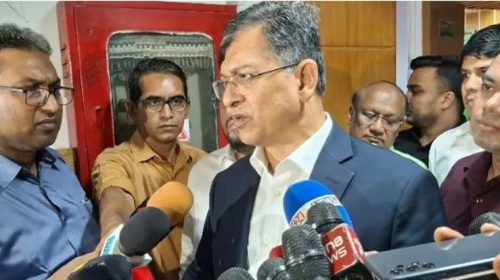


The Directorate of National Consumers’ Right Protection (DNCRP) will collect samples of poultry feed from the market and conduct laboratory tests to address concerns over feed quality and ensure the production of safe and quality poultry products, its Director General Md Zahirul Islam said today.
The directorate will also analyse every stage of the supply and value chains of eggs and poultry products to determine the actual production, supply and demand situation and improve market management, he said.
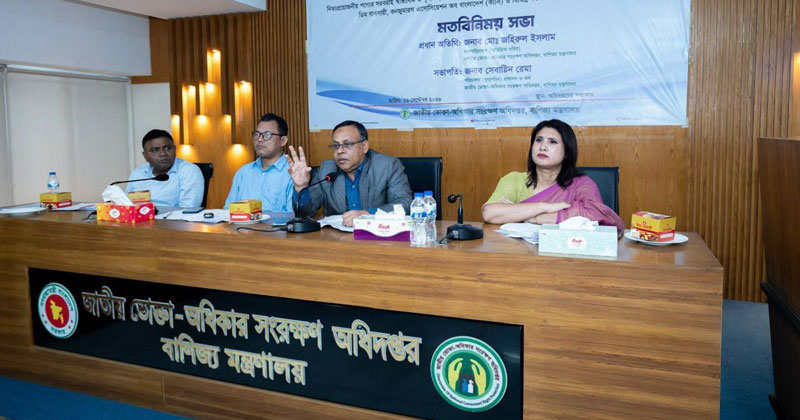
“Maintaining stable prices of eggs and poultry products and ensuring transparency in the supply chain from producers to consumers are the main objectives of today’s consultation,” Zahirul, also an additional secretary, said at a stakeholder meeting at the DNCRP headquarters in Karwan Bazar, Dhaka.
He said an imbalance between demand and supply could create instability in the prices of essential commodities.
“Therefore, market management needs to be made more effective based on accurate information on production and demand,” he said.
Zahirul said the quality of poultry feed was also an important concern, as any uncertainty among consumers about the safety and quality of poultry products could have long-term implications for nutritional security.
“Effective measures need to be taken so that consumers have no doubts or confusion about the quality of different types of feed used in the market,” he said, adding that samples would be collected and sent to laboratories for testing.
He also stressed the importance of maintaining proper purchase and sales receipts at every stage of the supply chain.
“If receipts are not available at the production level, necessary action will be taken under the existing law,” he said.
The DG said imposing fines was not the primary objective of the DNCRP.
“Protecting consumers’ rights is the main objective of the directorate. Legal enforcement is carried out to prevent irregularities by unscrupulous traders and safeguard consumer interests,” he said.
He called for a collective initiative to sustain small and marginal poultry farmers, saying the country’s poultry production and supply system was interconnected.
“A problem at any one stage of the supply chain can affect the entire market and push up prices,” he said.
He urged producers, farmers, traders and other stakeholders to work together to establish a transparent and effective supply chain from production to retail.
The DG also called on all stakeholders to keep egg prices at a reasonable and affordable level, expressing hope that cooperation, coordination and responsible business practices would help ensure transparency and stability in the egg and poultry market.
Heat, production costs cited for higher egg prices
The remarks came at a consultation meeting held to discuss ways to maintain normal supply and stable prices of essential commodities, particularly eggs and poultry products.
During the open discussion, Dr Shafiqul Islam, publicity secretary of the Bangladesh Poultry Industries Association, said excessive heat had reduced egg production, contributing to the recent rise in prices.
He said egg prices could decline within the next two weeks if market conditions returned to normal.
He also said farmers had suffered financially at different times when egg prices fell below production costs.
According to him, setting a fair price for eggs could encourage farmers to continue production and help maintain a stable supply throughout the year.
He warned that if small and marginal farms continued to shut down, the country could eventually become dependent on imports of eggs and poultry products to meet domestic demand.
Md Nazrul Islam, executive member of the Bangladesh Poultry Industries Association, said the current production cost of an egg was around Tk 11 per piece.
He said production costs, feed prices, other input costs and farmers’ additional expenses should be comprehensively assessed before determining whether the current market price was reasonable.
He stressed the need for a rational price based on the views of all stakeholders and the realities faced by farmers and businesses.
Feed prices under pressure
Anwarul Haque, general secretary of the Bangladesh Feed Industries Association, said around 70 per cent of the feed used by the country’s poultry industry was dependent on imports.
As a result, changes in international prices and import costs directly affected domestic feed prices, he said.
He said feed prices had increased over the past month and that higher-priced feed could enter the market in December.
Such increases could affect poultry and egg production costs and eventually influence market prices, he said.
CAB raises consumer concerns
CAB Organising Secretary Abul Kalam Azad said consumer interests must be considered alongside production costs and market prices.
He also raised concerns over the quality of poultry meat and eggs, particularly regarding the use of antibiotics, the quality of feed and various aspects of production management.
He said consumers had questions about the quality of eggs and poultry sold at prevailing market prices, even though comparatively expensive organic eggs were also available in the market.
He called for effective quality control and regular monitoring to address such concerns.
Industry representatives reject syndication allegations
Kazi Farms Managing Director Sultan Mahmud said demand and supply played an important role in determining egg prices.
Therefore, the overall market situation, including demand and supply, should be considered when determining prices, he said.
Responding to allegations of syndication in the egg market, he said the idea of a syndicate controlling the market was not accurate.
He said the country’s egg production system was diverse and involved multiple levels of producers, limiting the scope for a single group to control the market.
Tanvir Rahat, a representative of Paragon Group, also rejected the notion that corporate companies could independently control or syndicate the poultry and egg market.
He said the production and supply situation of small and marginal farmers played an important role in determining market prices.
Responding to questions about the price difference between Paragon eggs and ordinary eggs, he said differences in feed ingredients were one of the main reasons.
He said fish oil rich in omega-3 was mixed with feed to produce eggs with enhanced nutritional value.
2024 egg price no longer fully aligned with costs
Sultana Nasira, assistant director of the Department of Agricultural Marketing, said the egg price fixed in 2024 was no longer fully aligned with current production costs and market conditions.
The increase in feed and other production input costs had raised the cost of egg production, she said.
She said seasonal and off-season differences in production costs should be taken into account when determining egg production costs.
Market conditions, production costs, feed and other input prices, and demand-supply dynamics should be reviewed regularly, she said, adding that the Department of Agricultural Marketing could take initiatives to determine or revise prices when necessary.
The food safety authority offers testing
Mallika De, director of the Bangladesh Food Safety Authority, said there was no general basis for considering eggs unsafe food.
However, if consumers had specific complaints or information regarding the safety or quality of eggs, the authority would investigate the matter through testing, she said.
The representative of the Bangladesh Competition Commission said several cases involving alleged anti-competitive practices were currently pending.
Further necessary action would be taken after the cases were resolved by the courts, the representative said.
FBCCI Joint Secretary General Md Sakhawat Hossain Khan stressed the importance of making membership of the relevant associations mandatory for marginal poultry farmers.
DNCRP stresses cooperation over enforcement
At the meeting, DNCRP Director (Complaints and Investigation) Md Masum Arefin said the discussion had provided important insights into production, supply, price determination and market management in the egg and poultry sector.
He stressed the importance of ensuring food safety and hygienic conditions at shops and sales outlets where poultry are slaughtered and processed.
Arefin acknowledged the contribution of traders to meeting consumer demand and said producers, farmers, traders and other stakeholders all had important roles to play.
“Rather than holding any single party responsible, the problems need to be addressed through mutual cooperation and coordination,” he said.
DNCRP Director (Operations and Laboratory) Atia Sultana, in her welcome speech, said ensuring normal supply and stable prices of essential commodities, particularly eggs and poultry products, was a shared responsibility.
She said transparency must be ensured at every stage of the supply chain, from producers to consumers.
She also called for responsible action by all stakeholders to prevent abnormal price increases and artificial shortages.
Market monitoring finds irregularities
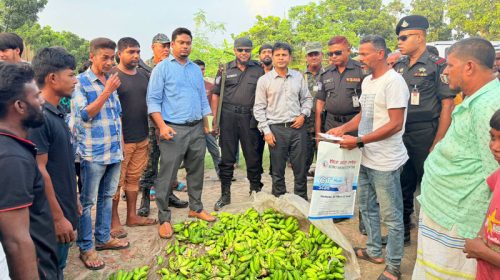
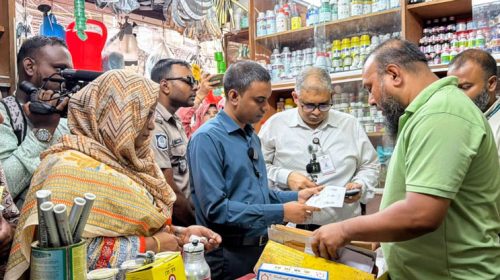
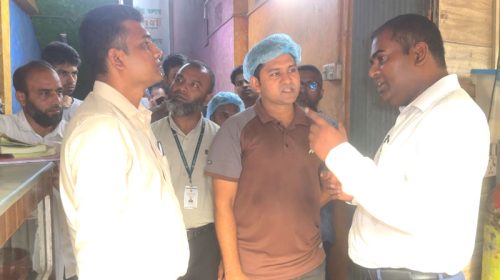
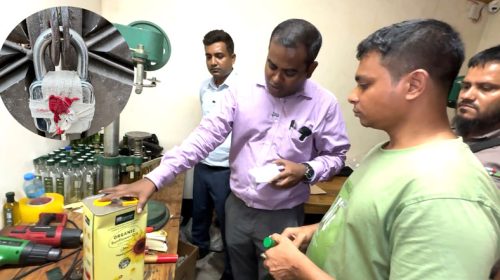
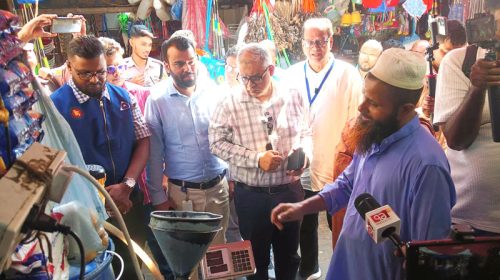
Nayon Kumar Saha, deputy director of the DNCRP’s Dhaka divisional office, and Assistant Director Rozina Sultana shared their experiences from market monitoring.
They said officials had observed several irregularities, including failure to display updated price lists, manipulation of weights and failure to provide purchase receipts.
They also highlighted other irregularities in businesses and called for greater compliance with consumer protection and food safety requirements.
Saha urged poultry farmers to avoid unnecessary use of antibiotics at the farm level and stressed the need to produce safe and quality poultry and eggs.
Both officials also emphasised maintaining cleanliness and hygienic conditions at business establishments.
DG: All stakeholders are consumers
Addressing the meeting as the chief guest, DG Md Zahirul Islam said everyone was a consumer in one way or another and therefore ensuring safe and quality food was a shared responsibility.
He reiterated that the DNCRP’s objective was to protect consumers rather than simply impose fines.
He said a transparent supply chain, accurate market information, quality control and cooperation among producers, farmers, traders and government agencies were essential to keeping the egg and poultry market stable.
The meeting was chaired by DNCRP Director (Administration and Finance) Sebastian Rema.
In his concluding remarks, Rema said eggs had become an important part of the daily diet of many families.
He said all stakeholders should work responsibly to remove consumers’ concerns over egg prices and quality.
The issues and recommendations raised at the meeting regarding production, supply, price determination, quality, safety and market management would be reviewed and steps would be taken to implement the decisions, he said.
The consultation was held on September 16 at the DNCRP headquarters at TCB Bhaban in Karwan Bazar, Dhaka, with representatives from government agencies, poultry industry associations, traders, consumer organisations and the media.