










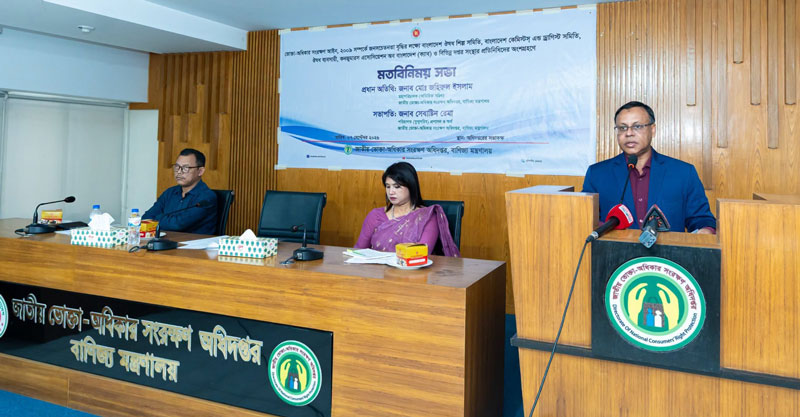
“Safe medicine is a right, not a privilege,” Director General of the Directorate of National Consumer Rights Protection (DNCRP) Md Zahirul Islam said yesterday, warning that expired, counterfeit, adulterated, and unauthorized medicines must not be sold or even kept on display.
Speaking at a discussion meeting on consumer rights in the pharmaceutical sector, he said preventing irregularities—not imposing fines—was the primary objective of the consumer rights watchdog.
“Fining is not the main objective of the directorate. Our primary goal is to prevent irregularities and ensure remedies for consumers,” Zahirul said.
He stressed that ensuring access to safe and quality medicines requires coordinated efforts by regulators, pharmaceutical manufacturers, medicine traders, physicians, and other stakeholders.
The DNCRP chief also announced joint drives with the Directorate General of Health Services (DGHS) and the Directorate General of Drug Administration (DGDA) to prevent the sale of counterfeit, adulterated, and unauthorized medicines.
“Preventing the sale of counterfeit, adulterated, and unauthorized medicines is not merely a matter of law enforcement; it is also a matter of ethics,” he said.
Zahirul made the remarks at the meeting, held at the DNCRP headquarters in TCB Bhaban, Karwan Bazar, to raise public awareness about the Consumer Rights Protection Act, 2009, and discuss ways to strengthen consumer protection in the pharmaceutical sector.
He said selling expired medicines was a serious offense and urged medicine traders to exercise the highest degree of caution and responsibility, particularly because medicines are essential to saving lives.
“No expired medicine should be sold or kept on display,” he said, adding that action would be taken against establishments operating without valid licenses.
The meeting brought together representatives of the Bangladesh Association of Pharmaceutical Industries, Bangladesh Chemists and Druggists Samity, the Bangladesh Pharmacy Council, the Consumers Association of Bangladesh (CAB), government agencies, pharmaceutical businesses and pharmacies, as well as journalists.
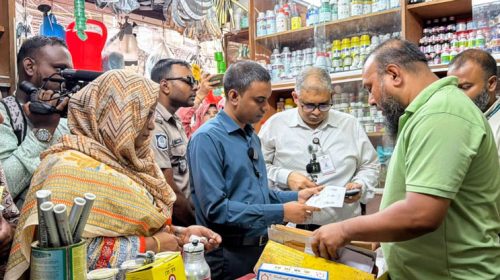
DNCRP officials said market inspections had uncovered a range of irregularities at pharmacies, including the sale of expired medicines, improper storage without maintaining prescribed temperatures, medicines without DAR numbers, and imported medicines without importers’ stickers.
They also found medicines being sold above the printed price, herbal, Ayurvedic, and other medicinal products being sold by establishments without complete addresses, and instances of altered expiry dates.
DNCRP Director (Operations and Laboratory) Atia Sultana, in her welcome speech, said the meeting was aimed at increasing public awareness of the Consumer Rights Protection Act and identifying effective measures to protect consumers in the pharmaceutical sector.
She said enforcement alone was not enough and that greater awareness, ethics, and a sense of responsibility among traders and manufacturers were also essential.
During the open discussion, representatives of medicine traders and pharmaceutical manufacturers called for clearer policies and stronger monitoring of physician samples, food supplements, and online medicine sales.
They also proposed dividing Dhaka into four zones to conduct awareness programs among medicine traders and urged regulators, manufacturers, traders, physicians, and other stakeholders to work together to ensure the quality and safe supply of medicines.
CAB Organizing Secretary Abul Kalam Azad said consumer awareness must be strengthened alongside greater accountability among all stakeholders to prevent the sale of counterfeit and adulterated medicines.
He also called for stronger monitoring to curb the production and marketing of counterfeit medicines in remote areas.
Government representatives urged pharmaceutical companies to supply medicines only to establishments with registered pharmacists and valid drug licenses. They also recommended using distinctly colored packaging for physician samples.
In his concluding remarks, DNCRP Director (Administration and Finance) Sebastian Rema advised pharmacies to keep expired medicines in separate boxes and display non-medicated products separately.
He also urged medicine sellers to provide consumers with accurate information, comply with prescription requirements, and display essential instructions in simple Bangla in visible places.
Rema further stressed the need to prominently display drug and trade licenses, saying proper compliance could significantly reduce the number of unregistered establishments.
The meeting was also attended by representatives of DGHS, DGDA, FBCCI, pharmaceutical industry and medicine traders’ associations, the Bangladesh Pharmacy Council, CAB, and various pharmacies.