






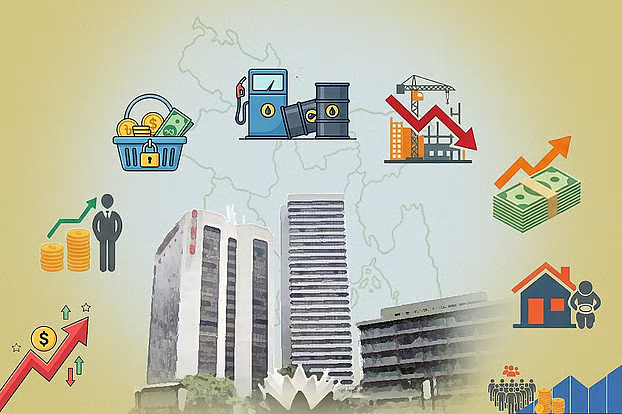
The new government has taken charge of the economy amid major challenges. For three consecutive years, GDP growth has declined. Private investment remains weak. As a result, the economy’s capacity to generate adequate new employment has declined.
The country’s financial sector is in crisis. The government has had to provide liquidity support to keep several banks operational. At the same time, inflation is above 8 per cent, which has reduced people’s purchasing power.
Low-income groups have been the worst affected. Due to declining revenue collection, the government’s ability to spend has shrunk. As a result, even if the government wants to stimulate the economy, it cannot increase spending.
Although pressure on the external sector has eased somewhat due to increased remittance inflows, exports have weakened further. Meanwhile, the war in the Middle East has increased economic risks. This could raise import costs, weaken exports, reduce remittances, and thereby widen the current account deficit.
Due to the Iran war, global fuel prices have increased. This raises the risk of further depreciation of the taka, which will push inflation even higher. If fuel subsidies increase now, the government’s fiscal space will shrink further.
Overall, the economy was already facing problems, with various structural weaknesses. Now, that economy is heading toward a deeper crisis. Analysts say that in this situation, to restore stability, rebuild confidence, increase private investment, and make the economy more sustainable, a well-coordinated macroeconomic stability strategy is needed, along with structural reforms.