



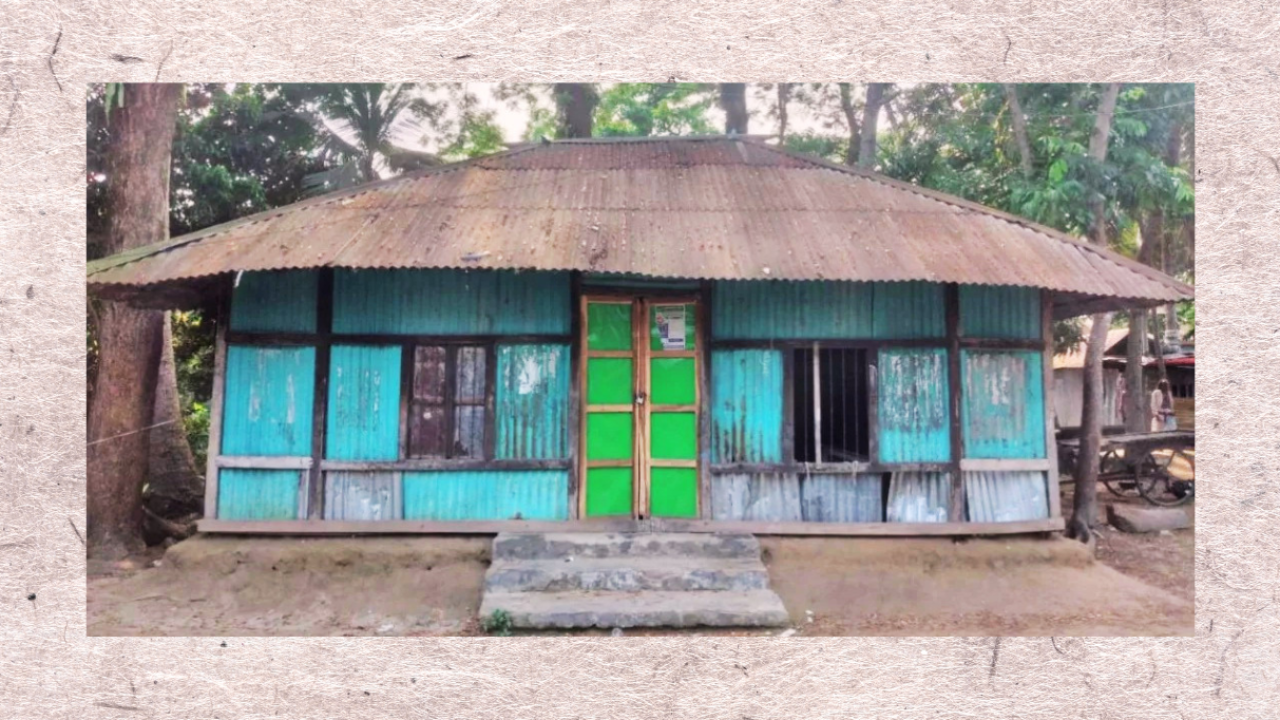
On monsoon afternoons in Gafargaon, Mymensingh, when the tin roof turned the whole world into noise, that room was where everything happened. Men came in from the fields, dripping. Vendors stopped mid-route. Someone’s distant cousin from three villages over would appear out of nowhere, sit down on the wooden chowki without being asked, and stay for an hour. My grandfather never once asked anyone their business before offering them a place to sit.
I remember sitting on the chowki as a child, watching this happen. I didn’t understand it then. I thought it was just what adults did. The visitors appeared, were received, then left, and life continued. It did not occur to me that the room itself was doing something. Its position at the very edge of the homestead, facing the road, was a kind of statement. Leaving the door open from morning to evening was a decision someone had made, long before my grandfather was born, and one that he was simply honouring.
That room was what we in Mymensingh call the ‘Baibari Ghar’, the outer house. And it is gone now. Not just from my grandfather’s homestead, but from Bangladesh altogether, so quietly and completely that most people haven’t even noticed it has left.
Walk through any village today and you’ll see what replaced it: concrete boundary walls, iron spikes along the top, padlocked collapsible gates, steel grilles on every window. The new rural home is a fortress. It is designed, very deliberately, to keep people out.