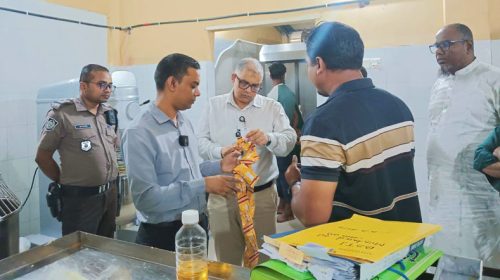







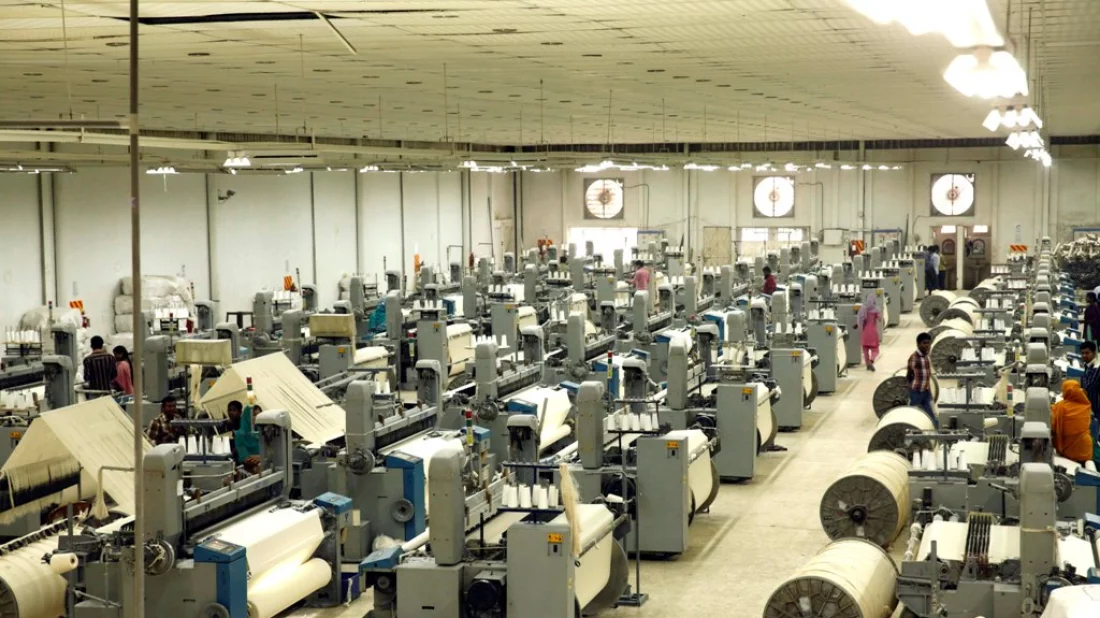
In a decisive move to overcome economic stagnation and jumpstart national growth, the government has prioritized the reopening of closed industrial units.
This initiative, backed by central bank policy support and high-level executive mandates, has emerged as a cornerstone of the national economic agenda.
By linking factory revivals directly to job creation and production growth, the administration views this not merely as a fiscal measure, but as a strategic national priority aimed at restoring the investment climate.
Bangladesh Bank governor Md Mostakur Rahman has maintained that sustainable economic momentum is unattainable without breathing life back into idle industrial units.
This stance has received top-tier political support, signaling a unified approach to industrial recovery.
To facilitate this revival, the central bank is exploring the creation of a special low-interest refinancing fund.
While the exact source of funding—whether from the state exchequer or the central bank’s own reserves—remains under discussion, a high-level committee is currently finalizing the framework.
This initiative is seen as a vital component in fulfilling the government’s pledge to generate significant employment within its first 18 months.
Beyond direct capital, a 19-member committee led by deputy governor Md Kabir Ahammed is drafting a comprehensive report on additional policy supports required to return these units to full production.
Business leaders have welcomed the initiative, offering several recommendations to ensure its success.
Key proposals include relaxing down-payment requirements for loan rescheduling, ensuring immediate working capital upon factory reopening, simplifying banking facilities to streamline import-export activities, and offering Letter of Credit (LC) facilities with lower margins.
Mohiuddin Rubel, former director of BGMEA, noted that reviving existing factories offers distinct advantages over establishing new ones. Reopening closed units allows for a much faster return to production and requires significantly lower capital expenditure compared to the high costs and long lead times associated with site selection and infrastructure development for new plants.
A significant challenge to forming a new refinance fund lies in the conditions set by the International Monetary Fund (IMF).
The IMF generally discourages large-scale refinancing tools, viewing them as “quasi-fiscal activities” that inject liquidity into the market and potentially drives up inflation.
In response to these global pressures, Bangladesh has already scaled back several existing funds, such as the Export Development Fund (EDF) and specialized CMSME allocations.
Consequently, policymakers are now evaluating alternative support mechanisms that can assist industries without breaching international financial covenants or jeopardizing monetary stability.
Roots of industrial stagnation
To ensure a sustainable recovery, the government is analyzing the factors that led to factory closures in the first place.
Industry insiders point to a combination of high-interest rates, policy uncertainty, and foreign exchange volatility.
Many entrepreneurs were forced to halt operations due to a lack of necessary financing or a decrease in export orders.
The current administration’s strategy focuses on correcting these systemic issues by fostering a more investment-friendly environment and reducing administrative hurdles.
Governor Rahman has indicated that a specific incentive package will soon be announced to encourage production-oriented activities and provide a safety net for recovering industrial units.
The successful revival of these factories is expected to yield multi-dimensional benefits for the economy.
By returning thousands of workers to their jobs, the government aims to boost domestic production and exports while simultaneously reducing the pressure of non-performing loans (NPLs) within the banking sector.
While the challenges—ranging from accurate factory listing to ensuring long-term market demand—are significant, the move is viewed as a necessary shift toward self-reliance.
In a global landscape marked by geopolitical tension and energy volatility, strengthening the domestic industrial base has become a matter of long-term economic resilience.
All eyes are now on the central bank and the executive branch as they move from policy discussion to the practical implementation of these industrial reforms.
https://www.dhakatribune.com/409289