










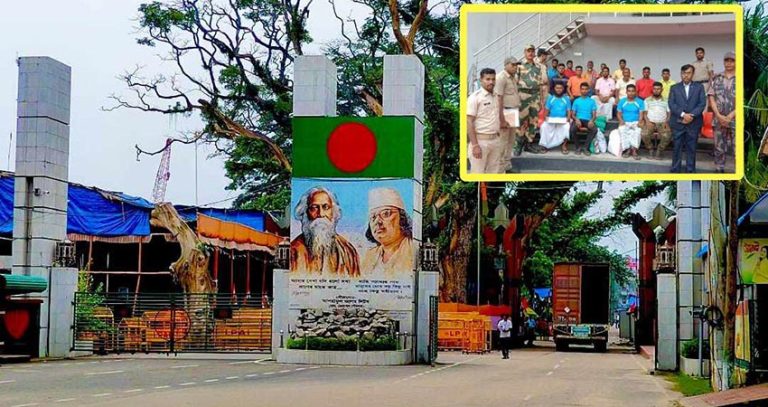
Every month, numerous women and children return to Bangladesh through the Benapole border after having once fallen prey to human traffickers. Lured with promises of jobs, marriage, or a better life abroad, they were taken across the border to various parts of India. Many endured horrific abuse, and while some are rescued and brought back, the journey home remains extremely challenging, and reintegration is often harsh.
Recently, 21 teenagers were returned from West Bengal, India. Of these, 10 were sheltered by Rights Jessore and the others are receiving reintegration support from Justice and Care. According to these NGOs, more than 2,000 women and children trafficked to India have been successfully repatriated over the past decade.
Khatun (pseudonym) from Narail shared, “A relative lured me with the promise of a job and took me to Kolkata. Later I realized I had been sold. I spent one and a half years among the traffickers.”
Human rights organizations report that traffickers charge 20,000–25,000 BDT to illegally cross each victim over the border, and then sell them inside India for 200,000–300,000 BDT. Most trafficking occurs through border points in Putkhali, Daulatpur, Gatipara, Rudrapur, Chaugachha in Jessore, and Satkhira.
Binoy Krishna Mallik, Executive Director of Rights Jessore, said, “Human trafficking remains a major threat to border communities. While trafficking has decreased somewhat compared to the past, we focus not only on rescue but also on legal assistance, counseling, and reintegration.” He added, “Victims often file complaints against traffickers, but administrative support is limited.” The cases of Jahanara and Poli from Jhikargacha illustrate this stark reality.
NGOs emphasize that poverty, lack of education, and limited awareness are the main drivers of trafficking. Weak border monitoring and the local influence of brokers pose major obstacles to prevention. Local residents complain that many traffickers operate under the protection of influential figures, making justice nearly impossible even after complaints.
Experts stress that rescue operations alone are insufficient to combat trafficking. Community-level awareness programs and swift, exemplary punishment for traffickers are essential. Only then can a long-term, effective barrier against human trafficking be established.