





US Vice President JD Vance did not mention the Strait of Hormuz in his news conference following hours of talks with Iran in Pakistan.
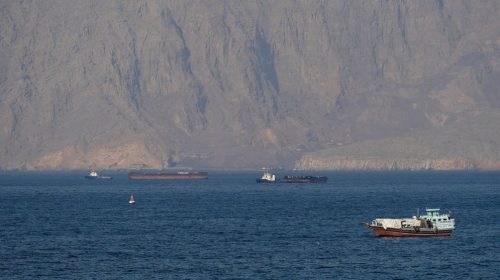
The vital waterway, where about 20% of the world’s oil and liquefied natural gas (LNG) usually passes through, was a sticking point in the talks, reports BBC.
A key part of the conditional ceasefire in place between the US and Iran has been the safe passage of ships through the strait.
The Iranian deputy parliament speaker Haji Babaei has said that the strait is a red line for Tehran, reports the Mehrs News Agency, which is linked to the Islamic Propagation Organisation.
He says the strait is completely in Iran’s hands and “its tolls must be paid in rials” – the Iranian currency.
Iran says more than 3,300 people killed during war
Iran says that more than 3,300 people have been killed in the country since strikes by the US and Israel began.
An update from Iran’s Legal Medicine Organisation – which is run by the Iranian judicial branch – says that the bodies of 3,375 people have been identified.
It says that 2,875 were men and 496 were women, with the Tehran, Hormozgan and Isfahan provinces seeing the highest death tolls.
Hundreds of children have been killed, according to the update. It reports that seven deaths were of babies under the age of one, 255 were aged between one and 12, and 121 were between 13 and 18.
Among those killed were Afghan, Syrian, Turkish, Pakistani, Chinese, Iraqi and Lebanese nationals, it says.
Smoke rises over southern Lebanon after Israeli strikes
Pictures show a thick plume of black smoke rising in southern Lebanon, close to the northern Israel border following strikes by Israel earlier.
An Israeli Apache helicopter was also photographed releasing flares as it flies over Lebanon.
It comes after our Middle East correspondent reports that there has been no respite from strikes in southern Lebanon.
US ‘failed to gain the trust of Iranian delegation,’ says head of negotiating team
Iranian Parliament Speaker Mohammad Bagher Ghalibaf, who led Tehran’s delegation in the Pakistan talks, says now is the time for the US “to decide whether it can earn our trust or not”.
In a post on X, Ghalibaf says he emphasised before the negotiations that Iran had “good faith and will” but due to its experiences of two previous wars it had “no trust in the opposing side”.
He says the Iranian delegation “raised forward-looking initiatives, but the opposing side ultimately failed to gain the trust of the Iranian delegation in this round of negotiations”.
He continues: “We will not for a moment cease our efforts to consolidate the achievements of the forty days of Iran’s national defense.”
He adds that the negotiations were “intense” and thanks Pakistan for facilitating them.
UK PM Starmer calls for US and Iran to ‘find a way through’ after failed talks
UK Prime Minister Keir Starmer urges both Iran and the US to “find a way through” following failed talks in Pakistan, Downing Street says.
In a conversation with the Sultan of Oman Starmer says a continuation of the ceasefire is “vital” and that “all parties avoided any further escalation”.
It comes after UK Health Secretary Wes Streeting told the BBC’s Sunday with Laura Kuenssberg programme it is “disappointing” initial talks to end the war in Iran had broken down without a deal.
Streeting defended the UK’s decision not to join the conflict.
How lead negotiators view the talks
We’ve just heard from Mohammad Bagher Ghalibaf, Iran’s parliamentary speaker and the chief negotiator in the talks with US in Pakistan.
It is the first time that someone from Iran, who was actually in the room for the discussions, has spoken – so how does his reaction compare to that of US Vice-President JD Vance?
Ghalibaf says that prior to talks, Iran had “no trust in the opposing side” because of “the two previous wars”.
He says that while the US has “understood our logic and principles”, it is now time for America to decide if it “can earn our trust”.
He adds: “We will not for a moment cease our efforts to consolidate the achievements of the 40 days of Iran’s national defence.”
Earlier on Sunday, Vance said the US had come to the negotiations “in good faith”.
“I think we were quite flexible, we were quite accommodating,” he said, but added: “We just could not get to a situation where the Iranians would accept our terms.”