


All administrative procedures have been
completed for forming a special panel of lawyers to ensure swift and
effective legal action against deepfakes, disinformation and cyberbullying on
social media.
“Only the formal government notification remains to be issued, which is
expected within the next one or two days as the government has taken zero-
tolerance policy against these offences,” Prime Minister’s Information and
Broadcasting Adviser Dr Zahed Ur Rahman said today.
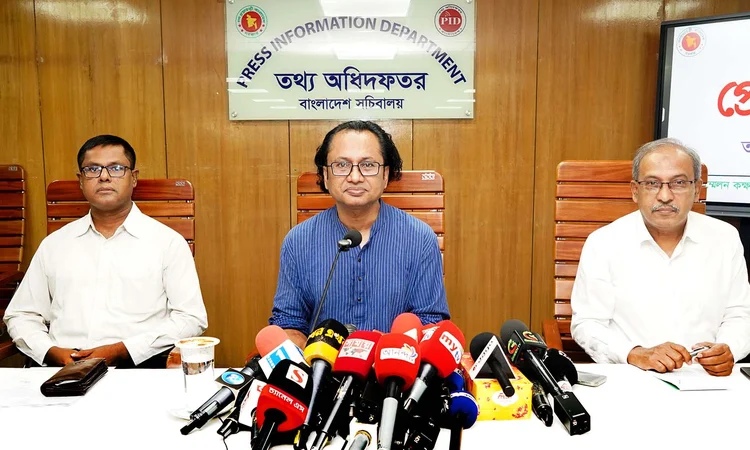
Speaking at the weekly press briefing at the Secretariat, Rahman said all
necessary administrative work-including publishing the notice, receiving
applications, interviewing candidates, and completing verification
procedures-has already been finalized.
He said the government has treated the misuse of information-particularly
disinformation and cyberbullying-as a serious concern.
The rapid expansion of social media has led to an alarming increase in the
spread of false information, smear campaigns, manipulated photos and videos,
and the misuse of deepfake technology, the adviser added.
These activities not only damage individuals’ reputations but also create
social instability and pose significant threats to public safety while women
are among the most frequent victims of cyberbullying on social media, he
said.
Many face targeted insults, threats, abusive comments, and false campaigns
simply because they are women, he said adding that in many cases, fake images
or videos are created to humiliate them publicly.
Considering this reality, he said, the government decided to establish a
special legal panel under the Ministry of Information and Broadcasting.
He said the legal panel would not only act upon receiving complaints but
would also have the authority to initiate legal action on its own initiative
when necessary. It will also actively handle cases the government considers
important, he added.
Its primary objective is to ensure legal protection for ordinary citizens and
provide prompt assistance to victims, he continued.
He urged citizens who become victims of cyberbullying, deepfakes,
disinformation, or online harassment to file complaints with the relevant
authorities.
The adviser said while social media provides freedom of expression,
responsible use of these platforms is equally important.
He explained that mainstream media follows editorial verification processes
before publishing news, whereas social media lacks such safeguards, allowing
anyone to spread information instantly.
For this reason, he urged users to be more cautious and avoid sharing
information or images without verification.
He added that while the state has a responsibility to raise public awareness,
citizens must also behave responsibly.
The government, he said, wants to make it absolutely clear that activities
such as disinformation, deepfakes, and cyberbullying will not be tolerated.
Anyone who deliberately engages in such offenses or spreads false information
to create public confusion will face legal action in accordance with the law,
he said.
About the dengue situation, Rahman also shared updates on the government’s
recent activities across various ministries.
According to the Ministry of Health and Family Welfare, dengue infections
have declined significantly compared with the same period last year.
As of July 20, 2026, Bangladesh recorded 10,857 dengue cases, down from
17,218 cases during the corresponding period in 2025.
Deaths have also declined, from 62 during the same period last year to 37
this year.
Although every death is tragic, he said the government’s coordinated efforts
have improved the overall situation.
Regarding energy, he said a list of 40 companies has been finalized through
an international competitive process for importing LNG from the spot market.
As part of the government’s plan to drill 150 onshore gas wells, 29 wells
have already been completed, he said.
These wells have secured production of approximately 270.8 million MMCFT of
gas, of which 125.3 MMCFT has already been supplied to the national gas grid,
said Zahed.
He said the government aims to complete the remaining wells by 2030, with an
expected additional production of around 1,491 MMCFT of gas. Proper
exploration of the country’s potential gas reserves would help ensure long-
term energy security, he added.
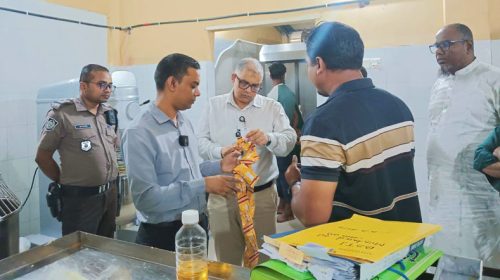
On food safety, he announced that the government has issued the Safe Food
Regulations 2026.
Under the new regulations, businesses involved in food production, import,
processing, storage, transportation, and marketing will be required to
register.
Regular mobile courts and market inspections will continue to ensure food
safety, and the country’s food stock has reached its highest level in
history.
Highlighting initiatives by the Ministry of Expatriates’ Welfare and Overseas
Employment, Rahman said the government will launch the Probashi Card on a
pilot basis in mid-August.
Initially, the debit card will be issued through state-owned banks, he said.
The government plans to distribute the cards to 50,000 expatriates by
December and 200,000 by June next year, he said.
Later, the programme will be managed through the Probashi Kallyan Bank, Zahed
said.
The card will provide expatriates with access to at least 10 different
services, he said.
Turning to environmental issue, he said the government is promoting
environmentally friendly jute bags as an alternative to polythene.
Affordable jute bags are being distributed in markets across Dhaka, while
mobile courts continue imposing fines and taking legal action against
individuals and businesses responsible for environmental pollution.
Regarding industry, he said 16 of the 25 mills under the Bangladesh Textile
Mills Corporation (BTMC) have been approved for operation under Public-
Private Partnership (PPP) arrangements.
The government expects this to increase private investment, improve
productivity, reduce the burden of government subsidies, and protect existing
jobs.