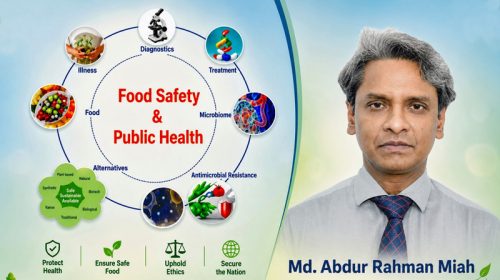











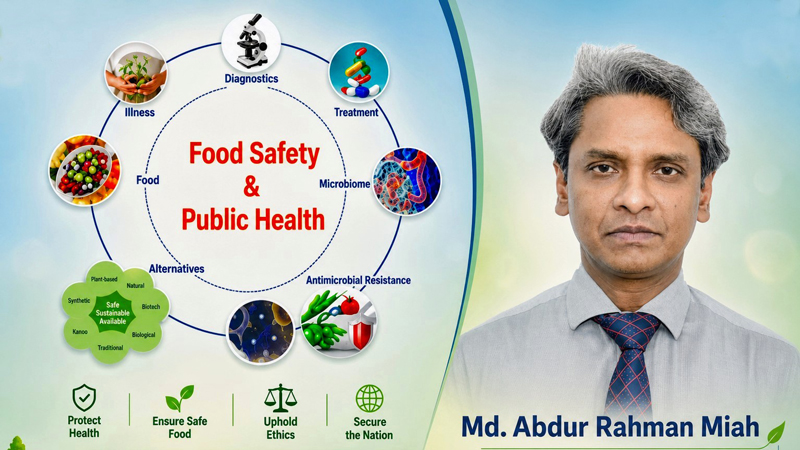
Food is essential to human life. It does far more than satisfy hunger; it supports physical growth, mental development, productivity, immunity and overall well-being. The health and future of a nation are closely linked to the quality and safety of the food consumed by its people. Yet food safety has become one of the most pressing public health concerns of our time, particularly in developing countries like Bangladesh.
In the past, people worried about having enough food to eat. Today, many are increasingly concerned about whether the food available to them is safe. Consumers often purchase fish, meat, milk, fruits, vegetables and other food items with uncertainty, wondering whether they contain harmful chemicals or contaminants that could damage their health over time. This concern is no longer occasional; it has become part of everyday life.
Food adulteration and contamination are not new problems. However, rapid commercialization, intense market competition and the pursuit of profit have made the issue more widespread and complex. Unsafe practices can occur at various stages of the food supply chain, from production and transportation to storage, processing and marketing. As a result, harmful substances frequently find their way onto consumers’ plates.
One major concern is the excessive use of pesticides in agriculture. Farmers often rely on pesticides to protect crops from pests and diseases. While their use may be necessary in certain situations, problems arise when these chemicals are applied in excessive amounts or when crops are harvested before the recommended waiting period has passed. In such cases, pesticide residues remain in fruits, vegetables, and grains and eventually enter the human body through food consumption.
The use of chemicals to artificially ripen fruits is another longstanding concern. Some traders use substances such as calcium carbide and other ripening agents to accelerate the marketing process. Although these chemicals may improve the appearance of fruits, they can compromise food quality and pose potential health risks. Similarly, harmful substances are sometimes used to preserve fish, meat and other perishable products beyond their natural shelf life.
What makes food contamination particularly dangerous is that its effects are often invisible in the short term. Unlike food poisoning, which may produce immediate symptoms, many harmful chemicals accumulate gradually in the body over years. Their long-term effects may include cancer, kidney disease, liver disorders, cardiovascular problems, hormonal imbalances and neurological complications. By the time such illnesses develop, identifying their original cause can be extremely difficult.
Children are especially vulnerable to these risks. Safe nutrition is vital not only during childhood but also during pregnancy. When expectant mothers consume contaminated food, harmful substances may affect fetal development. Scientific research has shown that certain toxic chemicals can negatively influence children’s physical growth, learning ability and cognitive development. Food safety is therefore not merely a present-day concern; it is an investment in the health and potential of future generations.
Food safety is also closely linked to environmental protection. Industrial pollution, contaminated water sources and unplanned urbanization create additional risks. In many areas, untreated industrial waste is discharged into rivers and canals, contaminating water used for irrigation. Fish and other aquatic species living in polluted environments may absorb harmful substances, including heavy metals such as lead, arsenic, cadmium and mercury. These pollutants eventually enter the food chain and pose serious threats to human health.
The consequences of unsafe food extend far beyond individual health. Chronic illnesses place enormous pressure on healthcare systems and increase medical expenses for families. A less healthy population means lower productivity, reduced economic output and greater social burdens. Food safety should therefore be viewed not only as a health issue but also as a matter of economic development and national resilience.
The problem cannot be blamed solely on dishonest traders. In reality, food safety involves a wide range of stakeholders, including farmers, producers, distributors, retailers, consumers and regulatory authorities. A farmer who lacks proper training may unintentionally misuse pesticides. A business owner facing intense competition may be tempted to adopt unethical practices. Consumers who prioritize appearance over quality may unknowingly encourage such behavior. Effective solutions require addressing every stage of the food system.
Ensuring food safety also means evaluating the safety of the pesticides and chemicals themselves. Monitoring how they are used is important, but regulators must also regularly assess their potential impacts on human health, biodiversity, soil and water resources. Some chemicals that remain available in certain markets have already been restricted or banned elsewhere due to safety concerns. Continuous scientific research, independent testing and periodic reassessment of approved substances are therefore essential. Chemicals proven to pose unacceptable risks should be promptly removed from the market.
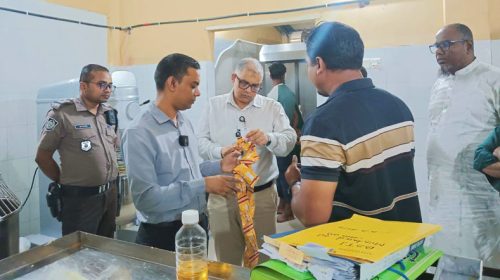
Addressing these challenges requires a comprehensive and coordinated approach. Laws alone are not enough unless they are effectively enforced. Bangladesh has enacted several legal measures to combat food adulteration and contamination. However, the true challenge lies in implementation. Regular inspections, laboratory testing, strict monitoring, swift legal action and accountability are necessary to ensure that regulations produce meaningful results.
Regulatory institutions must be equipped with modern laboratories, skilled personnel and advanced monitoring technologies. Food safety cannot be guaranteed unless quality control mechanisms operate effectively throughout the entire production and distribution process.
At the same time, responsibility cannot rest solely with government agencies. Public awareness is equally important. Consumers who demand safe food create pressure for higher standards throughout the market. An informed and vigilant public can serve as a powerful force against unethical practices.
Educational institutions can contribute significantly by teaching children about nutrition, hygiene and food safety from an early age. The media also has an important role to play by investigating violations, raising awareness and providing accurate information to the public. Sustainable change is possible only when food safety becomes a shared social priority.
Discussions about food safety often highlight organic agriculture. While organic farming offers important environmental and health benefits, it may not be realistic to rely exclusively on it to meet the food demands of a growing global population. However, reducing dependence on synthetic chemicals through integrated pest management, environmentally friendly farming techniques, and responsible agricultural practices can significantly improve both food safety and environmental sustainability.
Food safety is not only a scientific or regulatory issue; it is also a moral one. When someone knowingly sells food containing harmful substances, they are putting human lives at risk. Food producers, processors and traders carry a responsibility that goes beyond business transactions. They have an ethical obligation to protect the health and well-being of consumers. Without a strong culture of integrity and responsibility, laws alone cannot solve the problem.
A broader social movement against food adulteration is also necessary. Public attitudes toward smoking changed dramatically through sustained awareness campaigns and policy measures. A similar long-term effort is needed to promote food safety. As public awareness grows, policymakers, regulators and businesses will be encouraged to act more responsibly.
Food safety also affects international trade. Countries that fail to meet international food safety standards risk losing access to valuable export markets. Maintaining high-quality standards therefore protects not only public health but also national economic interests and global competitiveness.
Ultimately, the strength of a nation depends on the health, productivity and intellectual capacity of its people. If unsafe food gradually undermines public health, it will also weaken national development. Safe food is not a luxury reserved for a privileged few; it is a fundamental human right. Just as people are entitled to clean water, healthcare, and education, they are equally entitled to food that is safe for consumption.
Ensuring food safety requires collective action. Governments must strengthen regulations and enforcement. Farmers and businesses must adopt responsible practices. Scientists and researchers must continue to evaluate risks and develop safer alternatives. Consumers must remain informed and vigilant.
In the final analysis, safe food is about much more than what appears on our plates. It is about health, dignity, justice and the future of our society. If we ignore this challenge today, future generations will bear the consequences. But if we act together with commitment and determination, we can build a healthier, safer and stronger Bangladesh. Ensuring safe food is therefore not merely a policy goal-it is an essential requirement for national survival, sustainable development, and the well-being of present and future generations.