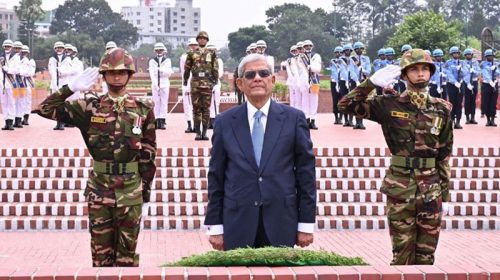


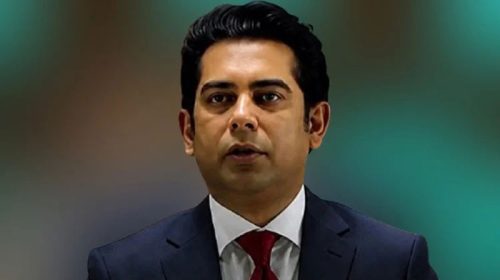

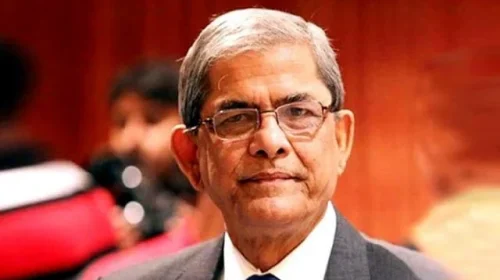

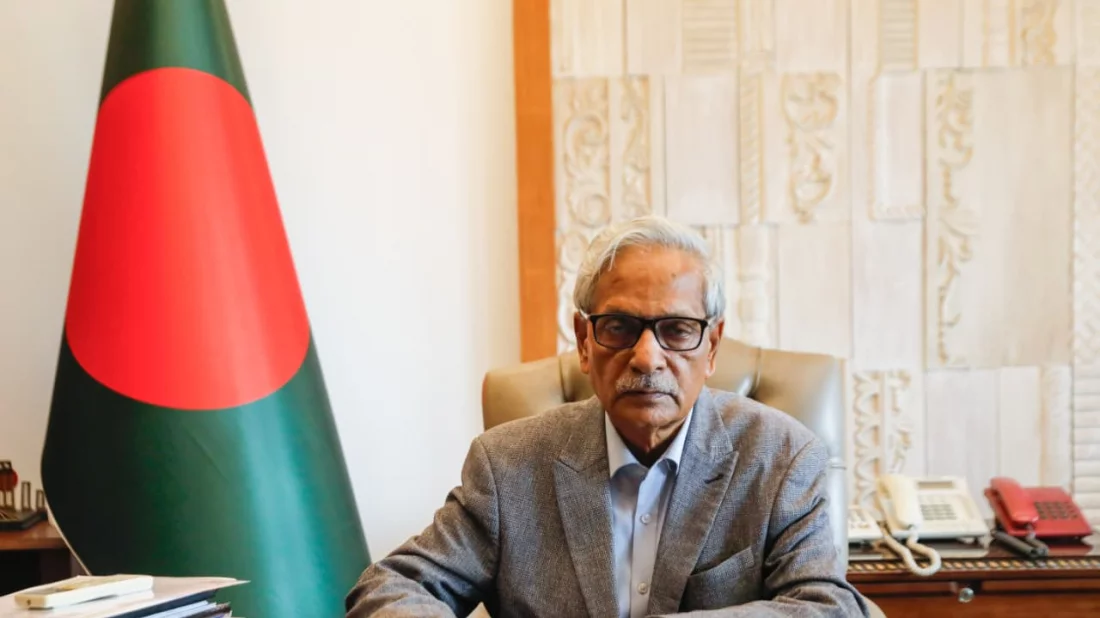
Over the years, he has served as state minister for the ministries of education, youth and sports, and law, justice and parliamentary affairs. He also served as chairman of the Magura District Council with the status of a minister, and is currently a vice-chairman of BNP.
Recently, he spoke to Dhaka Tribune’s Tanvir Hasan on a range of contemporary issues.Nitai Roy Chowdhury: I have said this before—this is the Baishakhi procession. It is a procession of joy, and the decision has been taken from a clear and considered standpoint.
There has been confusion over the names “Mangal Shobhajatra” and “Ananda Shobhajatra”. However, the reality is that the festival is deeply rooted in the history and heritage of Bangladesh.
The first “Ananda Shobhajatra” began at the Faculty of Fine Arts in 1989 and continued as a tradition. After the change of government in 1996, it was renamed “Mangal Shobhajatra”. During the last interim government, the name was changed again.
However, Pohela Boishakh itself is much older—it is rooted in a thousand-year-old agrarian society. At that time, urban civilisation had not yet developed, yet farming communities observed the festival.
At present, two groups are locked in a dispute over the name—both driven by fundamentalist positions. We do not want to engage in this division.
We have clearly decided that it will be called the “Baishakhi Shobhajatra”. This is the government’s position.
Some organizations, including Hefazat-e-Islam, have also said that instead of appointing music teachers in schools, the number of religious teachers should be increased. What is your opinion?
They are free to express their opinions—that is part of the democratic process. We are speaking from our position as a government elected by the people, and it is our responsibility to take decisions in line with public expectations.
I do not understand why there should be opposition to music. Music is an essential part of our culture—it shapes people’s intellect, values and creativity.
If someone suggests increasing the number of religious teachers, they are entitled to that view. However, we believe it is important to ensure a strong place for culture within the education system. The appointment of music teachers is being advanced in coordination with the Ministry of Education.