
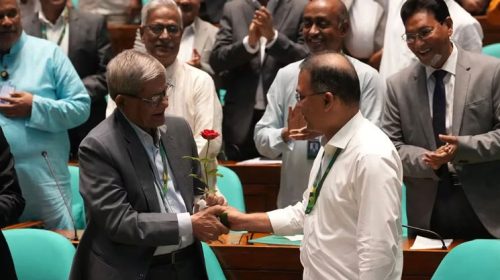










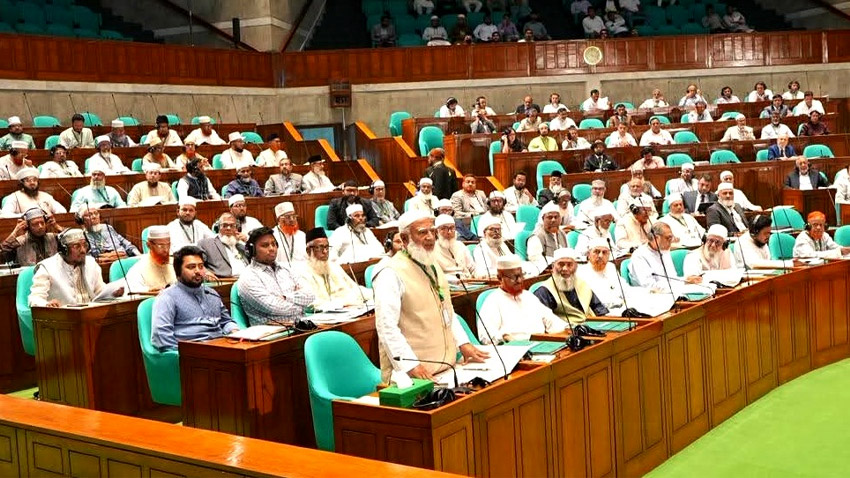
The Jatiya Sangsad witnessed vigorous procedural exchanges Sunday when Opposition Leader Dr Md Safiqur Rahman attempted to introduce urgent discussion on constitutional reform implementation connected to the July National Charter.
The Jamaat-e-Islami Ameer raised a point of order requesting permission to discuss his formally submitted notice concerning the “July National Charter Constitutional Reform Implementation Order 2025,” which he characterized as carrying utmost public importance.
Safiqur Rahman informed the Deputy Speaker, presiding over the session, that he had previously received guidance from the Speaker to submit the matter through proper channels and had fulfilled that requirement. He emphasized provisions related to convening the Constitutional Reform Council warranted immediate parliamentary attention.
Treasury bench members led by Chief Whip Nurul Islam objected to bypassing established parliamentary sequence, arguing that conventional practice mandates completing question-answer sessions and Rule 71 proceedings addressing urgent public importance matters before considering such notices.The Chief Whip emphasized protecting procedural rights of all parliamentarians, particularly backbench members who depend on question time and Rule 71 mechanisms to raise constituency concerns. He suggested the matter could receive consideration following completion of Rule 71 business.
The Opposition Leader maintained his request complied with parliamentary regulations including Rule 64, asserting that raising the issue at that juncture represented both his right and responsibility. He pressed the Chair for immediate acceptance of his notice.
Home Minister Salahuddin Ahmed intervened, noting that scheduling decisions fall under the Speaker’s discretion and that postponing discussion until after ongoing business concludes would not constitute rights violations.
Opposition parliamentarians argued forcefully that the matter’s exceptional national significance “connected to referendum procedures and July Charter implementation “justified deviation from routine scheduling priorities.
The Speaker acknowledged receipt of the notice and committed to addressing it according to parliamentary rules. He confirmed the House would proceed with Rule 71 before returning to the Opposition Leader’s proposal.
“The notice will be duly considered after completion of scheduled proceedings,” the Speaker assured members, promising a decision would follow established protocols.
The procedural clash underscores continuing tensions between opposition parties seeking urgent debate on political reform commitments emerging from the July uprising and government insistence on maintaining parliamentary conventions.
The July Charter represents demands and principles stemming from the 2024 July uprising that preceded political transition. Its implementation status has become a focal point in governance debates, with opposition figures warning that disregarding charter provisions contradicts public will.
Jamaat Secretary General Mia Golam Porwar recently demanded parliamentary discussion and implementation steps for the charter, cautioning that ignoring the document would risk destabilizing street protests.
A special parliamentary committee is currently reviewing 133 ordinances issued during interim government administration, with several contentious items including referendum provisions still under deliberation.
Opposition Whip Rafiqul Islam Khan previously alleged government intentions to eliminate important ordinances despite reaching agreement on many measures, claims denied by committee leadership.
The procedural standoff reflects broader political dynamics as parliament navigates inherited policies from the transitional period while balancing reform aspirations against administrative continuity requirements.
Sunday’s exchange demonstrates how technical parliamentary procedures can become battlegrounds for substantive political disagreements over constitutional reform priorities and timeline urgency.
The Speaker’s commitment to address the notice after completing scheduled business represents an attempt to balance opposition demands with maintaining orderly parliamentary functioning and protecting backbench participation rights.
Whether and when substantive debate on July Charter implementation will occur remains uncertain, though the opposition’s persistent efforts signal their determination to keep reform commitments prominent in legislative discourse.