


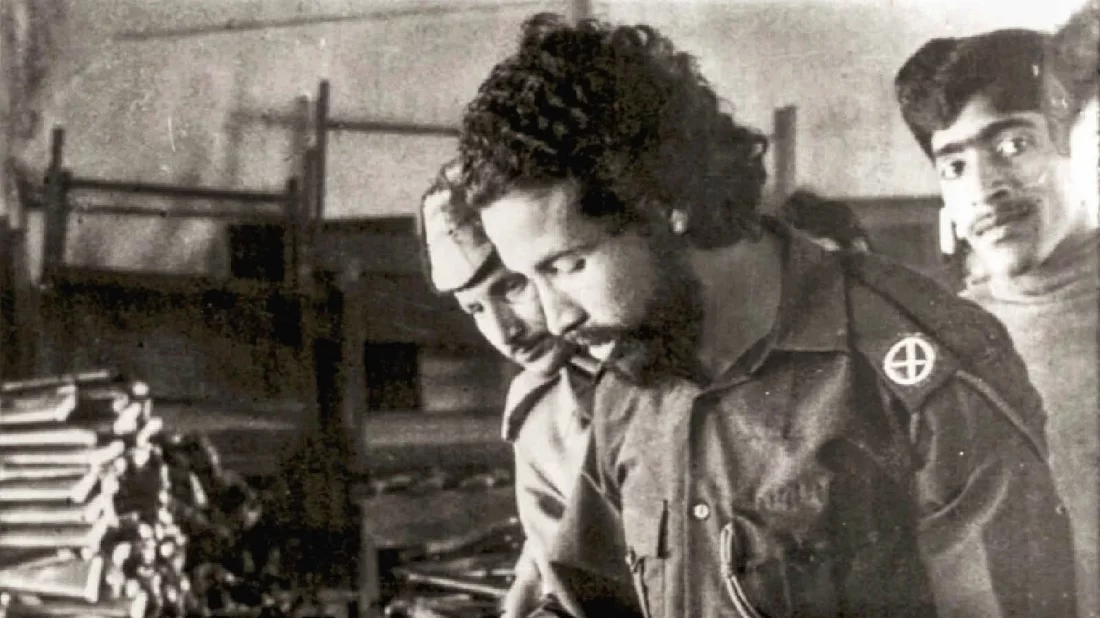
The scars of war may have faded with time, but in Tangail, the memory of sacrifice, resistance and defiance remains deeply embedded in the nation’s journey to independence.
Tangail holds a significant place in the history of Bangladesh’s Liberation War, shaped by a legacy of political and cultural resistance that dates back to the Language Movement of 1952.
The district’s people played a crucial role in the struggle for independence in 1971, and the courage and determination of its freedom fighters continue to define its historical identity.
Among the most prominent forces active in the region during the war was the Kaderia Bahini, led by Abdul Kader Siddique.
Formed through a civilian initiative, the force emerged as a key resistance group in central Bangladesh.
Formation and operational areas
During the Liberation War, the Mujibnagar Government divided the country into 11 sectors to organise resistance against Pakistani forces.
Alongside these formal sectors, the Kaderia Bahini was established under Kader Siddique’s leadership.
The force operated across a wide area, including Tangail, Jamalpur, parts of Mymensingh and Netrokona, Manikganj, large areas of Sirajganj, and northern parts of Gazipur and Dhaka.
Following the declaration of independence on March 26, 1971, Tangail remained under local control until April 3.
During this period, local Awami League leaders formed the Tangail District Swadhin Bangla Ganamukti Parishad at a meeting held at the residence of Advocate Nurul Islam.
The council was led by Abdul Latif Siddiqui as convener, with Badiuzzaman Khan as chairman, and Kader Siddique among its key members.
It began organising resistance and training freedom fighters.
However, Pakistani forces entered Tangail on April 3.
On their way, clashes occurred with Bengali members of the East Pakistan Rifles (EPR) and local freedom fighters at Satiachara in Mirzapur.
Following resistance, Pakistani troops carried out widespread killings, looting and arson in surrounding areas.
Rise of Kaderia Bahini
After initial setbacks in Tangail, Kalihati and Madhupur, freedom fighters regrouped in Baherateil, a remote area of Sakhipur.
From there, the Kaderia Bahini was reorganised and expanded.
Under Kader Siddique’s leadership, the force grew rapidly, eventually comprising around 17,000 fighters, supported by an estimated 18,000 volunteers.
The group carried out numerous guerrilla attacks and ambushes against Pakistani forces across the region.
His leadership and battlefield tactics earned him the name “Bagha Siddique” among Pakistani troops.
On August 16, 1971, Kader Siddique was injured in his right hand during a battle in Makrai village of Ghatail.
Despite his injury, he continued to lead operations — an event later remembered as the “Makrai battle.”
Other local resistance groups, including the Baten Bahini led by Khandakeout coordinated attacks, further weakening Pakistani positions.
In December, intelligence reports indicated that several ships carrying arms and ammunition were being sent via the Jamuna River to reinforce Pakistani forces stationed in Tangail.
Members of the Kaderia Bahini carried out a sabotage operation at Matikata in Bhuiyanpur, destroying multiple vessels and recovering weapons from others.
These actions significantly disrupted Pakistani supply lines and affected troop morale.
Liberation of Tangail
By early December, Pakistani forces in Tangail were under sustained pressure from continuous attacks.
On December 8, plans were made to launch a coordinated assault.
Clashes took place at Pungli, after which Pakistani troops began retreating towards Dhaka.
Freedom fighters of the Kaderia Bahini, along with allied forces, launched counterattacks from multiple directions.
On December 11, joint forces captured key installations, including the Tangail Circuit House, effectively liberating the district.
Following the victory, large numbers of people took to the streets, celebrating with slogans of “Joy Bangla” and “Joy Bangabandhu.”
Legacy
During the war, at least 155 members of the Kaderia Bahini were killed, while around 500 were injured.
Seventeen fighters from the force received national gallantry awards.
Today, Tangail bears numerous memorials, sculptures and plaques commemorating the Liberation War and its martyrs.
One of the earliest memorials in the district was established at Bhuiyanpur High School ground on December 11, 1971, under the direction of Kader Siddique, and formally inaugurated on December 16.
The legacy of the Kaderia Bahini remains an integral part of Bangladesh’s Liberation War history, symbolizing organized civilian resistance and regional mobilisation against occupying forces.
https://www.dhakatribune.com/406162