

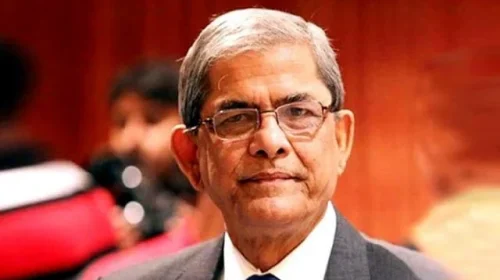

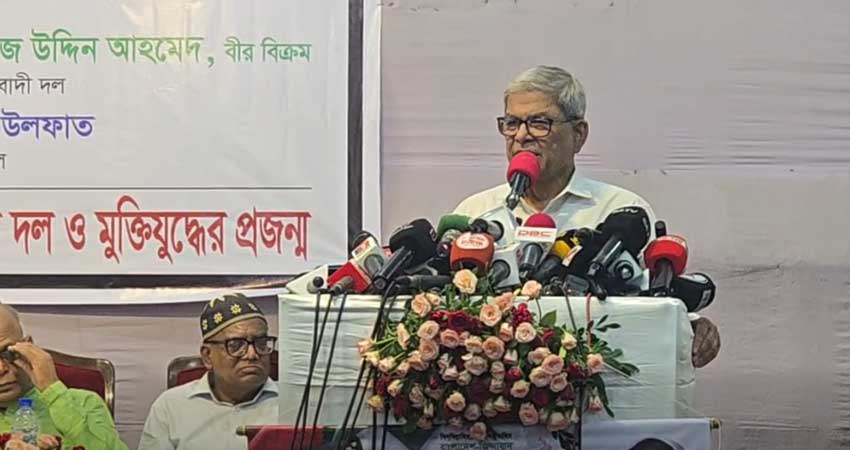
BNP Secretary General Mirza Fakhrul Islam Alamgir said that forgetting 1971 is simply not an option, as that year marks the birthplace of Bangladesh. “This land gained its status as an independent country then. We must always remember that 1971 represents our existence, our identity, and our uniqueness,” he said.
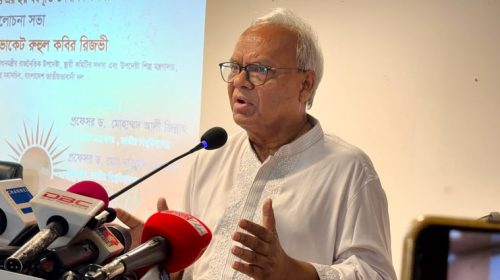
He made these remarks on Saturday at a discussion session titled “The Upcoming National Parliament Election Is Essential to Safeguard Independence, Sovereignty, and Democracy”, organized by the Bangladesh Nationalist Freedom Fighters’ League and the Generation of the Liberation War at the National Press Club auditorium.
Mirza Fakhrul criticized those who opposed the independence movement in 1971, claiming they are now trying to undermine its significance. “They want to glorify the movement of 24 July while diminishing 1971. For 15 years, we struggled to establish democracy, to defeat fascist forces, and to remove Hasina from power. Freedom fighters contributed immensely. If anyone claims to have led alone, we do not accept that,” he added.
He highlighted the oppression faced by BNP members, stating, “False cases have been filed against six million people. Our party leader, the country’s most popular figure, Begum Khaleda Zia, had to spend six years in prison and was sentenced to ten years in a false case. Senior BNP members, including Hafiz Bhai and Elias Bhai, were abducted, and over 1,700 people were disappeared. Two thousand were killed under a fascist and brutal regime led by Sheikh Hasina. We fought against this. While we do not wish to sow division, some forces are intentionally trying to create rifts. Those who want to erase 1971 have only one goal—to deny its truth.”
He also recalled the atrocities of 1971 and the subsequent political developments: “Those who killed us in 1971 joined hands to murder people in this country. Many of our intellectuals were killed and buried in mass graves—we have not forgotten. After the political shift in 1975, President Ziaur Rahman initiated reforms in Bangladesh, moving from single-party to multi-party governance. Following him, Begum Khaleda Zia transitioned the country from a presidential to a parliamentary system, implementing caretaker government regulations despite our objections, under which nearly four elections were held successfully. Sheikh Hasina later annulled these provisions, undermining people’s right to vote.”
Mirza Fakhrul reiterated BNP’s pro-election stance: “We have always called for elections. After the mass uprising, we demanded elections within three months, to prevent emerging anti-democratic forces from gaining ground. Misleading the people to manipulate reforms must be exposed.”
On the issue of the recently passed agreements, he said: “We signed the document in Parliament amidst rain, holding umbrellas. It was agreed that dissenting points of political parties would be recorded as notes of dissent. However, the current proposal to the Chief Advisor ignores this. As a responsible political party, we held a press conference but did not protest on the streets, blockade the Chief Advisor’s residence, or the Election Commission. We will take responsibility for what we signed, but not for what we did not.”
Regarding the possible referendum, Mirza Fakhrul said, “The Parliament will decide if there will be a referendum. The Chief Advisor announced that elections should be held in February 2026. We have agreed to a referendum, though it was unnecessary. We suggested holding the referendum alongside the elections, as a separate one would cost over a thousand crore taka. There will be two ballots: one for the referendum and one for parliamentary elections. At no point have we proposed delaying elections; they must be held promptly. People should not be misled.”
The session was presided over by Bir Muktijoddha Ishtiaq Aziz Ulfat, with remarks from BNP Standing Committee member Major (Retd.) Hafiz Uddin Ahmed, Advisor to the Chairperson Bir Muktijoddha Abdus Salam, Advocate Syed Moazzem Hossain Alal, and others.