






Transparent competitive tariff bidding, credible project qualification standards, coordinated land and grid planning and enforceable development timelines can create the certainty domestic and foreign investors and lenders require
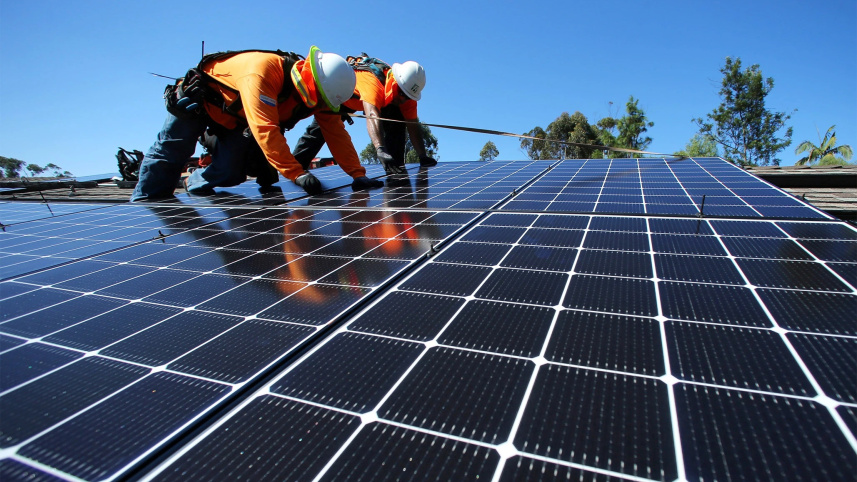
Solar power is often discussed as a policy ambition in Bangladesh, one which has become more pertinent given the ongoing global energy uncertainty and price volatility.
Bangladesh’s energy security depends on how quickly renewable ambitions translate into real projects — spearheaded by solar.
Google News LinkFor all latest news, follow The Daily Star’s Google News channel.
Developing around 5,000 Megawatt peak (MWp) of solar could require over Tk 35,000 crore in generation investment, excluding land and supporting infrastructure — making bankable projects and investor confidence essential.
In Bangladesh, 1 MWp of solar capacity can generate roughly 1.4 million kilowatt-hour (kWh) annually, highlighting solar’s potential contribution to the national power supply.
International experience shows that countries can scale solar from negligible levels to 20–30 per cent of installed capacity within a decade or even faster when supported by clear policy frameworks, bankable procurement structures and coordinated infrastructure planning.
Despite repeated policy commitments and long-term energy planning, solar deployment in Bangladesh has remained limited — and this is solely because of an incomplete implementation framework.
In several cases, projects were awarded without confirmed land access, grid interconnection or developers demonstrating the financial and technical capability required to deliver utility-scale projects.